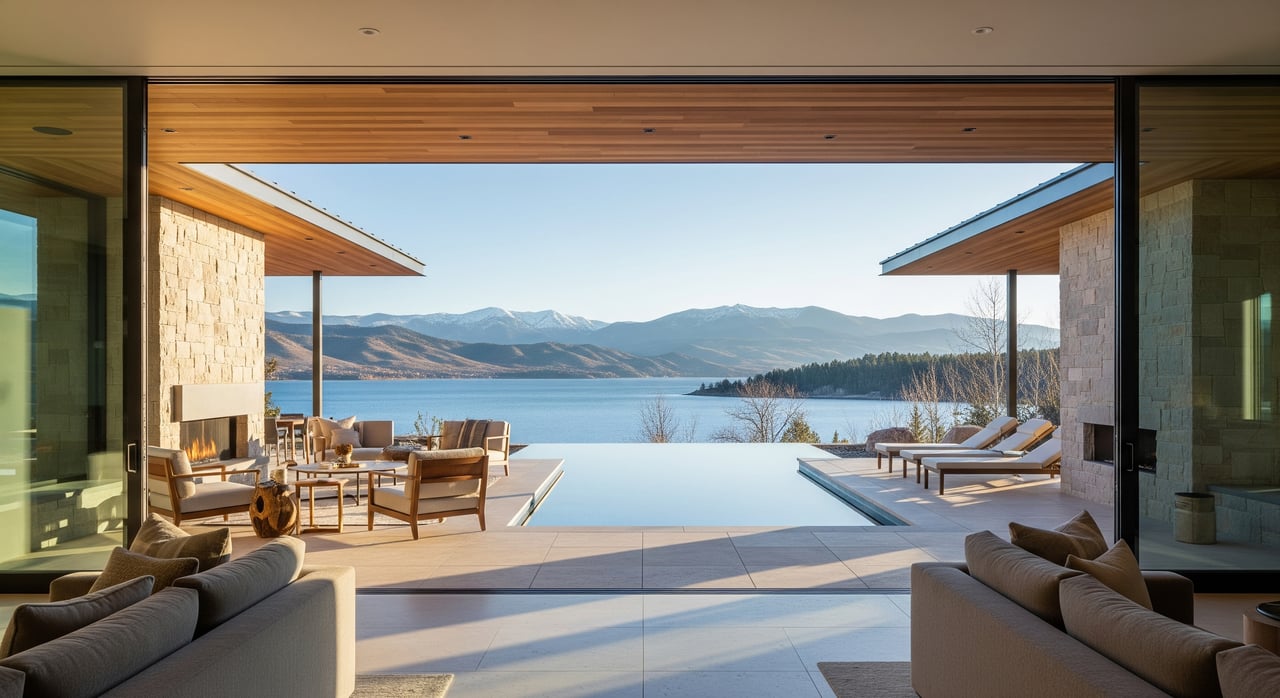
You chose Heron Lakes for the shimmering water and that unmistakable Front Range backdrop, but are you getting the full panorama from your home? In Berthoud’s bright, high-altitude light, small design and staging choices can make a big difference in how those views live day to day and how they show in photos. In this guide, you’ll learn practical, high-impact moves that respect local climate, HOA rules, and shoreline sensitivity while elevating your home’s view appeal. Let’s dive in.
Know your view lines in Heron Lakes
Heron Lakes homes often orient west or southwest toward the Front Range, with reservoirs and fairways in the foreground. Your best long views typically align along those western and southern quadrants. Understanding that baseline helps you decide where to focus upgrades and where to keep things simple.
Northern Colorado gets strong sun, big temperature swings, and dry air. Late-day summer sun is especially intense on west-facing glass, and winters are cold but bright. You can confirm local climate patterns in the region through the National Centers for Environmental Information for planning and comfort considerations (NOAA climate normals).
At roughly 40.3 degrees north latitude, the sun is high in summer and low in winter, which affects shading depth and window performance choices. For sizing overhangs and dialing in shading, explore sun-path tools and resources from the National Renewable Energy Laboratory to visualize angles across seasons (NREL solar resources).
Start with siting and layout
Prioritize the right rooms
Place primary living areas and the primary suite toward the side of the lot with the strongest combined lake and mountain view. Push garages, utilities, and secondary spaces to the less scenic edges. If you are planning a remodel, consider a split plan or a staggered layout so more rooms catch the main view corridor.
Keep massing low and long
Low, elongated building forms preserve panoramas better than tall, narrow volumes. If you are adding a deck or terrace, step it down toward the water or fairway so the guardrail and furniture sit below eye level from inside. Keep sheds and accessory structures behind the main viewing plane.
Plan circulation and sightlines
Align major sightlines so you see the water and mountains the moment you enter. Minimize full-height interior partitions near the view. Low furniture, partial walls, and clear openings protect the horizontal band of scenery.
Glass that shows the view and performs
Choose orientation-tuned glazing
You can enjoy crisp views without sacrificing comfort by matching glass to orientation. As a starting point for Northern climates, target a U-factor of 0.30 or lower to limit winter heat loss, and use low-E insulated units with argon fill and thermally broken frames. On south-facing windows, a moderate SHGC around 0.35 to 0.45 can harvest winter sun if you have proper overhangs. On west-facing glass, favor a lower SHGC around 0.20 to 0.30 to reduce late-day heat. For fundamentals on window performance and coatings, review federal efficiency guidance on windows and glazing from the Office of Energy Efficiency and Renewable Energy (Energy Saver overview).
Always verify performance on the certified label and specify products tested for your climate zone. The National Fenestration Rating Council explains what each rating means and how to compare options (NFRC ratings).
Slim frames and clear corners
To maximize glass and minimize visual clutter, choose narrow sightline frames with warm-edge spacers and thermally broken construction. Consider picture windows paired with operable awnings below or casements nearby so you get airflow without dividing the view. Where structure and HOA rules allow, a clear glass corner can deliver a dramatic panorama.
Control sun and glare
Use fixed horizontal overhangs or deep eaves on south-facing glass to block high summer sun while allowing low winter sun. West-facing glass is tougher to shade with overhangs, so combine low-SHGC glazing with vertical fins, exterior screens, or adjustable shading. Exterior shading generally blocks more heat than interior blinds while preserving view clarity.
Landscape to frame, not block
Pick plants that work in Larimer County
Think of landscaping as a picture frame. Keep the center low and open, and place taller plants to the sides to draw the eye to the horizon. Use drought-tolerant natives and adapted species that thrive in local soils and irrigation conditions. Colorado State University Extension offers practical guidance and plant lists for northern Colorado xeriscapes and native choices (CSU Extension landscaping resources).
Deciduous trees in the foreground can give filtered privacy in summer and open up the long view in winter when leaves drop. Favor layered shrubs and native grasses in the central foreground so sightlines remain clear.
Privacy without the view
Create privacy to the sides with staggered plantings and low, layered beds. On decks, glass or cable railings keep the horizon visible. Consider trellises or perforated screens placed off to the side instead of directly in the view corridor.
Mind permits near shorelines
If you plan pruning near the water, adding a dock, or doing any grading, confirm HOA and local permit rules first. Start with Larimer County resources for setbacks and erosion control, and check the Town of Berthoud planning pages for local guidance before you begin work (Larimer County planning, Town of Berthoud planning).
Quick staging and photo wins
Before your photo shoot
- Wash interior and exterior glass and remove screens for the shoot.
- Swap heavy curtains for sheers or low-profile shades to keep the view clear.
- Trim branches that cross the horizontal midline of the view, and tidy low beds.
- Use lower-profile sofas and chairs near windows so backs do not cut the scene.
- Clear patios and decks, and stage with a few low pieces to show scale.
Brief your photographer
- Shoot at golden hour or twilight to balance interior light and the outside scene.
- Use moderate wide angles to avoid distortion and keep verticals straight.
- Expose for the view with bracketing or HDR, and control reflections by turning off problem lights.
- A polarizer can help outside; use it carefully to avoid darkening mountains or water.
For more on what buyers notice and how photography supports outcomes, review consumer-facing guidance from the National Association of Realtors on staging and media best practices (NAR resources).
High-ROI fixes sellers love
- Replace bulky deck railings with glass or cable where allowed.
- Install narrow-framed sliding or folding doors to open the room to the view.
- Add a built-in bench under a picture window to activate the foreground in photos.
- Use retractable exterior shading on west exposures for comfort that disappears for photos.
Your Heron Lakes view punch-list
- Confirm HOA and local permits before pruning, shoreline work, or exterior changes.
- Prioritize living areas and the primary suite on the best view side of the lot.
- Choose low-E, insulated windows with NFRC-verified ratings, and match SHGC to orientation.
- Size south overhangs using sun-path analysis, and use vertical or adjustable shading on west.
- Favor slim frames and reduce mullions at the primary viewing plane.
- Frame the view with side plantings and low central beds; keep the horizon clear.
- Stage and shoot at the right times, remove screens, and reduce reflections.
- Maintain an annual plan for window cleaning and selective pruning to protect sightlines.
Next steps
Every lot in Heron Lakes is different. Orientation, neighboring homes, golf fairways, and shoreline rules all shape what will work best. Validate shading and overhang concepts with a quick sun study using trusted solar resources, confirm any HOA or permit requirements, and then sequence improvements so you get maximum impact before you list. If you want a tailored plan that ties design edits to market strategy, request a private consultation and we will map the changes that move the needle.
Ready to elevate your views and your results in Heron Lakes? Request a confidential market consultation with Unknown Company.
FAQs
What window specs work best for west-facing glass in Berthoud?
- Use low-E insulated units with a U-factor of 0.30 or lower and a lower SHGC around 0.20 to 0.30 to manage late-day heat while preserving clear views.
How big should my south overhang be for seasonal control?
- Size fixed overhangs using sun-path analysis so high summer sun is blocked and low winter sun enters, referencing NREL tools and your home’s exact orientation.
Which native plants help frame views without blocking them?
- Favor drought-tolerant natives like serviceberry, chokecherry, Gambel oak, and native grasses, and keep taller plants to the sides with a low, open center per CSU Extension guidance.
Do I need permits to trim trees or add a dock near the reservoirs?
- Always check HOA rules and consult Larimer County and the Town of Berthoud for shoreline and grading permissions before pruning, removing trees, or proposing dock or hardscape work.
When is the best time to photograph lake and mountain views?
- Shoot at golden hour or twilight to balance interior and exterior light, clean windows, remove screens, and bracket exposures so the scenery is crisp without blown highlights.